Overview
Office carpets see it all, from muddy shoes and coffee spills to the steady stream of employees and visitors moving throughout the building. In this blog post, Whitlock Building Services, LLC’s janitorial team dives deep into how often office carpets should be cleaned and the steps businesses can take to address stains, prevent wear, and support a cleaner workplace.
Highlights
- Office carpet cleaning frequency
- Commercial carpet cleaning methods
- Removing office carpet stains
- Benefits of professional carpet cleaning
Introduction
How important is carpet cleaning in an office environment? With constant foot traffic, accidental spills, and everyday wear, your flooring is exposed to challenges that can take a toll on its condition.
Understanding how to properly care for carpeting can help you maintain a cleaner, more professional workspace while protecting your investment. Below, we’ll explore the fundamentals of office carpet cleaning, from recommended cleaning schedules and proven cleaning methods to practical solutions for handling common workplace stains.
How Often Should an Office Carpet Be Cleaned?
Office carpets should be cleaned regularly because they experience high levels of daily wear in the workplace. Every employee, customer, vendor, and visitor who walks through your doors contributes to the dirt, dust, and debris that accumulate throughout the day.
The ideal frequency depends on:
- Foot traffic levels
- Employee and visitor volume
- Seasonal weather conditions
- Food and beverage activity
- High-traffic area locations
Which Spaces Need the Most Frequent Cleaning?
Most office carpets should receive daily to weekly vacuuming and spot treatments. Deep cleaning schedules can vary based on the factors mentioned above.
Here’s a general guideline for deep cleaning:
- Entrances and lobbies: Every 1 to 3 months
- Reception areas, waiting rooms, main hallways: Every 2 to 4 months
- Break rooms and employee lounges: Every 3 to 6 months
- Open office areas and shared workspaces: Every 3 to 6 months
- Conference rooms, meeting spaces, and private offices: Every 6 to 12 months
Businesses in industries such as healthcare, education, hospitality, and retail may require more frequent cleaning due to higher visitor volumes and increased exposure to dirt, moisture, and contaminants. Regular professional cleaning helps maintain a clean appearance, improve indoor air quality, and extend the life of your carpeting.
What’s the Best Method for Commercial Carpet Cleaning?
The best approach to commercial carpet cleaning depends on several factors, including the material, condition, foot traffic, and the level of cleaning required. A lightly soiled area may only need routine maintenance, while heavily used spaces often require more intensive treatment to address accumulated dirt and debris.
Several cleaning methods are commonly used in commercial environments, including vacuuming, encapsulation, dry cleaning, and hot water extraction. Each option is designed to address different maintenance needs and levels of buildup, making certain methods more appropriate for specific situations.
Vacuuming
Office carpets take a beating throughout the workday. Regular vacuuming helps manage the dirt, dust, and debris tracked in by employees, customers, and visitors as they move throughout the building.
Most facilities benefit from frequent vacuuming, especially in entrances, hallways, reception areas, and other high-traffic spaces. Since this method is suitable for nearly all office carpet types, it's often the foundation of an effective maintenance routine.
While vacuuming can't address stains or deeply embedded buildup on its own, it plays an important role in preserving appearance and supporting a cleaner office environment between more intensive treatments.
Encapsulation
Encapsulation is often considered the next step beyond routine vacuuming. While vacuuming removes dirt and debris from the surface, this method is designed to address the soil and buildup that can remain trapped within the fibers over time.
Encapsulation uses a specialized cleaning solution that surrounds and crystallizes contaminants, making them easier to remove during subsequent maintenance. Since it relies on minimal moisture, it's often used in office environments where extended drying times aren't practical.
Encapsulation works well for many commercial carpet types and is commonly used in facilities that need more than routine upkeep but don't require the intensity of a deep restorative cleaning. For many workplaces, it serves as a practical middle ground between daily maintenance and more extensive treatment methods.
Dry Cleaning
Dry cleaning is often a good option when office flooring has started to look tired, even while routine maintenance is ongoing.
This approach uses specialized cleaning compounds to target buildup that can accumulate over time, helping refresh heavily used areas without introducing significant moisture into the workspace. As a result, it can be completed with minimal disruption to the workday, making it a practical choice for busy office environments.
It works well with many commercial flooring materials and is often selected when appearance has declined, but a full restorative treatment isn't necessary. For many facilities, it’s an effective way to make high-traffic areas look cleaner, brighter, and more presentable.
Hot Water Extraction
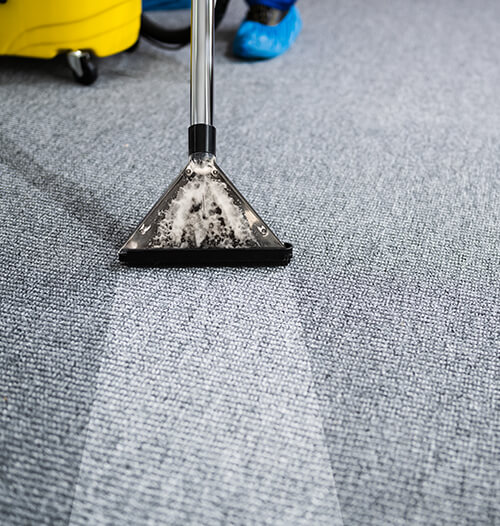
Hot water extraction is often the preferred option when office flooring needs more than a surface-level refresh. This method uses hot water and specialized equipment to remove dirt, allergens, and other contaminants that have become embedded deep within the fibers over time.
Since it provides a more thorough level of cleaning, it's commonly used in high-traffic areas or spaces that haven't received deep cleaning for an extended period. Since additional drying time is typically required, it's best to perform this type of cleaning after business hours or during slower periods when disruption can be kept to a minimum.
This approach works well for most commercial carpet types and is often considered the most effective solution for restoring appearance and addressing significant buildup.
How Do You Get Stains Out of an Office Carpet?
Stains are an inevitable part of life in a busy office. Coffee spills, tracked-in mud, and ink marks can all leave their mark on flooring, especially in areas that experience heavy daily traffic. The key to minimizing long-term damage is addressing spills as quickly as possible before they have an opportunity to set into the fibers.
The best removal method often depends on the type of stain and how long it has been present. Some issues can be resolved with prompt spot treatment, while others may require more specialized attention.
Understanding how different stains should be handled can help preserve appearance and prevent permanent discoloration.
How Do You Get Coffee Stains Out of Carpet?
Coffee is one of the most common carpet stains found in office environments. Whether it's caused by a rushed morning meeting or an accidental spill at a workstation, addressing the issue quickly can help prevent lasting discoloration.
If there’s a spill, follow these steps:
- Blot excess liquid.
- Avoid rubbing the area.
- Apply an appropriate cleaning solution.
- Continue blotting until the stain lifts.
- Allow the area to dry completely.
Fresh spills are generally much easier to remove than stains that have been allowed to dry and set over time. Professional cleaners can also remove coffee stains.
How Do You Get Ink Out of Carpet?
Removing ink stains from your carpet requires a careful approach. Unlike many common spills, ink can spread quickly through carpet fibers and become increasingly difficult to remove once it has had time to set. Whether the stain comes from a leaking pen, permanent marker, or printer toner, taking the wrong approach can often make the problem worse.
One of the most important things to remember is to avoid scrubbing the affected area. While it may seem like the fastest way to remove the stain, scrubbing can cause it to spread, penetrate deeper into the fibers, and create a larger area of discoloration. Instead, the stain should be treated gently with a carpet-safe cleaning solution appropriate for the flooring material and the type of ink involved.
How Do You Get Mud off Carpet?
Removing mud from carpets is a common challenge in Texas office buildings, especially after heavy rain. Employees, customers, and visitors can easily track dirt indoors, leaving behind stains that affect the appearance of entrances, hallways, and other high-traffic areas.
If mud is tracked onto your carpet, professionals follow these steps:
- Allow the mud to dry completely before cleaning.
- Vacuum the area to remove loose dirt and debris.
- Apply a carpet-safe cleaning solution to the stain.
- Blot the area gently with a clean cloth.
- Allow the carpet to dry completely before evaluating the results.
Trying to remove this debris while it's still wet can spread the stain and make cleanup more difficult.
What Are the Benefits of Professional Carpet Cleaning?
While routine maintenance plays an important role in day-to-day upkeep, professional carpet cleaning can address issues that aren't always visible on the surface.
Key benefits of hiring professional carpet cleaning services include:
- Improved appearance: Addressing accumulated buildup can help restore a cleaner, more uniform look throughout the office.
- Extended service life: Removing abrasive debris may help reduce premature wear and support the long-term condition of the flooring.
- Odor reduction: Professional treatments can help address odors caused by spills, moisture, and trapped contaminants.
- Healthier indoor environment: A deeper level of cleaning can help reduce the presence of allergens and other pollutants that affect indoor spaces.
By removing embedded contaminants and providing a deeper level of care, these services can help create a cleaner, healthier workplace.
Support a Cleaner Workspace With Office Carpet Cleaning
The condition of a workplace is often reflected in the details. While flooring may not be the first thing employees or visitors notice when they enter a building, it’s one of the first signs that a space is consistently cared for.
Whitlock Building Services, LLC’s carpet cleaning services help businesses create cleaner, more welcoming environments through professional care. Our team works with organizations of all sizes to support cleaner facilities and maintain professional workplace standards. Whether your facility requires routine maintenance or more intensive treatment, our team can help keep your flooring looking its best.
Call (817) 583-7180 to schedule an office building cleaning consultation with our team.